Wednesday, June 15, 2011

Being a Hunter-Gatherer -- Lesson 3

Even hunter-gatherers can use their finds for fun. 

My yard is full of dandelions.  A friend recently showed me a recipe for dandelion wine, so I decided to try it out myself.  Filling the colander with blossoms was a quick process.
 Freshly picked dandelion blossoms.

Pulling the yellow petals out of the green parts took forever! I think next time I'll try a batch without separating the greens, even though I've read it makes for a more bitter drink.  The steeped dandelion petals smelled really good, even better with the added oranges.
Dandelion petals in the soup pot for steeping.

My recipe only makes a gallon, so I'm fermenting it in my Mr. Beer keg. Now I just have to wait for the yeast to do its thing. It will take six months to a year, so I guess I'll be drinking some homebrewed beer while I wait!
Making beer.

Friday, June 10, 2011

Camping at Beartown

This weekend was my inaugural camping trip of the season. I was so excited, especially since this time last year I had been in camping mode for months out in Nevada. 

I had signed up for a wild edible plants walk for Sunday afternoon, so I wanted to camp nearby, or at least so that I could hit the walk on the way home.  I ended up in Massachusetts at Beartown State Forest.  The name sounded a bit ominous for my first Northeastern camping experience, so I took the excuse to try out my new bear canister.  Here it is, with my water bottle for scale.


Planning meals when everything has to fit in a bear canister (and no cooler!) is tricky!  Because one of my goals for the year is to go backpacking, I tried to plan meals for this trip as if I were backpacking. Not all the meals we ate were backpacking, but I thought I did a pretty good job keeping us from being hungry.  While camping, Hiking Buddy and I ate:

Friday Dinner:
hotdogs and potato salad (OK, this wasn't "backpacking food," but we had leftovers we needed to eat) 

Saturday Breakfast:
oatmeal and instant coffee

Saturday Lunch:
Bean, cheese, and salsa burritos (I froze a container with everything in it, and it had thawed perfectly for lunch)

Saturday Dinner:
Pine Valley Couscous, a backpacking recipe from "The Lip Smackin' Vegetarian Backpackin' Cookbook"
hot cocoa for dessert

Sunday Breakfast:
oatmeal and instant coffee

The Pine Valley Couscous was really good!  We might even eat the extra serving as a side dish one night this week. On Sunday, we ended up going to a diner in the nearby town for eggs and hashbrowns... I have a hard time resisting fried potatoes!

The campground at Beartown was pretty nice, and I would definitely consider going back there.  It did have a bit of a weird set up. Our campsite was really big, and on the edge of some woods with only one neighbor.  I wanted to show it off with pictures, but my camera battery mysteriously decided to die as soon as we pulled in!  Anyway, we had a nice campsite, the campground over all was nice, and they had really nice composting toilets, which is something to appreciate when camping. 

The first night, I laid awake listening for sounds of bears searching for food in the campground.  After a while, I fell asleep, only to be woken by a soft snorting. I was instantly wide awake. What was that? Certainly not the rummaging of the ubiquitous chipmunks at our site. There it goes again! That sounded closer. Silence. Again! Wear is it? By the picnic table? By the car? By the tent?! SNORRRRT! HOLY COW PLEASE DON'T EAT ME, BEAR!


Oh, wait, Hiking Buddy is snoring.

I really freaked myself out good. Ha! The next night, I wore earplugs, and slept through the night. The first morning, I did enjoy listening to the morning symphony of birds.  During my trip to Beartown, I heard and/or saw:

1. Pileated Woodpecker
2. Yellow-Bellied Sapsucker
3. Red-bellied Woodpecker
4. Black and White Warbler
5. Blackburnian Warbler
6. Great Blue Heron
7. Barred Owl
8. Cedar Waxwing
9. Robin
10. Catbird

I think there were more, but I forgot to write them down right away. It was a good feeling to be able to lay there, half-awake and cozy warm in my sleeping bag, and identify birds by sound.  I definitely couldn't do that a year ago, or even a few months ago!

On Saturday we had a nice time hiking some of the trails at Beartown.  I tried to find a geocache up a muddy ATV trail, but no success.  All in all, it was a relaxing and fun camping trip!

On Sunday, we went on a wild edibles plant hike sponsored by the Columbia Land Conservancy.  It was led by wild food guru Russ Cohen.  Again, no camera, or I'd show you lots of pictures!  It was a really great walk, and I learned a lot.  Did you know you can use wild grape leaves like the non-wild ones? I had never thought of that before.  I'm not a huge fan of stuffed grape leaves, but I might just have to try WILD stuffed grape leaves.  He also showed us what parts of cattails you can eat.  Yum! 

Friday, June 3, 2011

Being a Hunter-Gatherer -- Lesson 2

A couple of months ago, local foodie friends were excited about two wild edibles: morels and ramps.  Morels are wild mushrooms that pop up here in the spring.  I went on a mushroom walk with a mycologist, and saw lots of fun fungi, but no morels. Subsequent walks yielded no prize, so I will just have to wait.  Ramps are early spring garlicky greens that grow in patches.  They are notorious for the pungent odor and taste.  I DID manage to find a patch of wild ramps, and harvested just enough for a taste. OH EM GEEZ what garlicky goodness!

Freshly harvested wild ramps

I used these to make a ramp and mushroom pizza. Yum!  This weekend I'll be going on another wild edible plants walk, with an entirely different group in a different place.  Want me to save you some weeds?

Monday, May 30, 2011

Being a Hunter-Gatherer -- Lesson 1

I like food.

I like free food even better.  Lately, I've been learning a lot about free (or cheap) food.  I'm becoming a hunter-gatherer -- okay, minus the "hunter" part. I've been learning about wild edible plants and mushrooms, making wine out of weeds, taking things a step further by growing my own garden, and "homesteading" it by making my own bread and pizza dough.

To be a successful hunter-gatherer, you have to know what's safe to eat. My first step in learning about this was joining a wild edible plants walk led by "Wildman" Steve Brill.  He showed the tour all kinds of weedy looking plants that are actually edible! In fact, many plants we commonly consider weeds are edible.  On his tour, I learned to identify garlic mustard, wild carrots, evening primrose, and more. Did you know that daylilies are edible?! He also showed the tour poisonous plants to avoid, like wild hemlock which looks very similar to wild carrot. It was a really fun time!

A daylily -- it tastes like snap peas!

On the hunt for wild carrots in a pasture

After the tour, I began to view my weed-filled yard with a new -- and hungry-- eye. Wild field garlic and onion everywhere, wild carrots galore, and more garlic mustard than I could use.  I'm keeping tabs on the wild strawberries and grape vines, hoping that the birds will save me some fruit.

Even the stray cat that's adopted me is being resourceful:
Eww, Stumpers got a mouse!

Wednesday, March 30, 2011

Winter Fun... It's Almost Done!


Oops! I haven’t written anything in a while. Did you miss me?

Back in the fall, I was determined that the cold and snow and gray skies of the winter would NOT keep me from enjoying the outdoors.  For having never lived in a snowy climate before, I think I succeeded! 

As soon as there was enough snow on the ground, I strapped on my new snowshoes and hit the trails!


Okay, so that picture was taken in the front yard, but you get the idea. Walking with snowshoes is akin to what I imagine walking with clown shoes to be like. A bit cumbersome, but they get you where you’re going.  They really do keep you from sinking deep into the snow. 

I tried cross-country skiing, too! I’ve only been skiing once, and that was a long time ago, so I was a bit nervous about sliding around all over the place.  To alleviate those fears, I took a lesson. It was great! I rented the gear for the day, and after the lesson hit the center’s (easy) trails for a bit.

I fell down a lot, and avoided any steep hills, but had a lot of fun.  The center even had a ski lodge with hot cocoa and a roaring fire to relax beside.  The next day, I discovered so many sore muscles I never even knew I had!  I only managed to go that once, but definitely will try cross-country skiing again sometime.

I was 23 years old the first time I went sledding. I was visiting a friend in Maryland, and the sky opened up and dumped snow like there was no tomorrow. As we were walking to get coffee, we passed a steep hill crawling with kids sledding on it. Upon confession of my sledding-virginity, my friend quickly acquired a borrowed sled, and down the slippery slope I went!  It was fast, a bit scary, and I got snow down my pants. This winter, I was convinced to try it again.
Here’s me, getting ready to go:


I think slow-speed sports are more my thing.

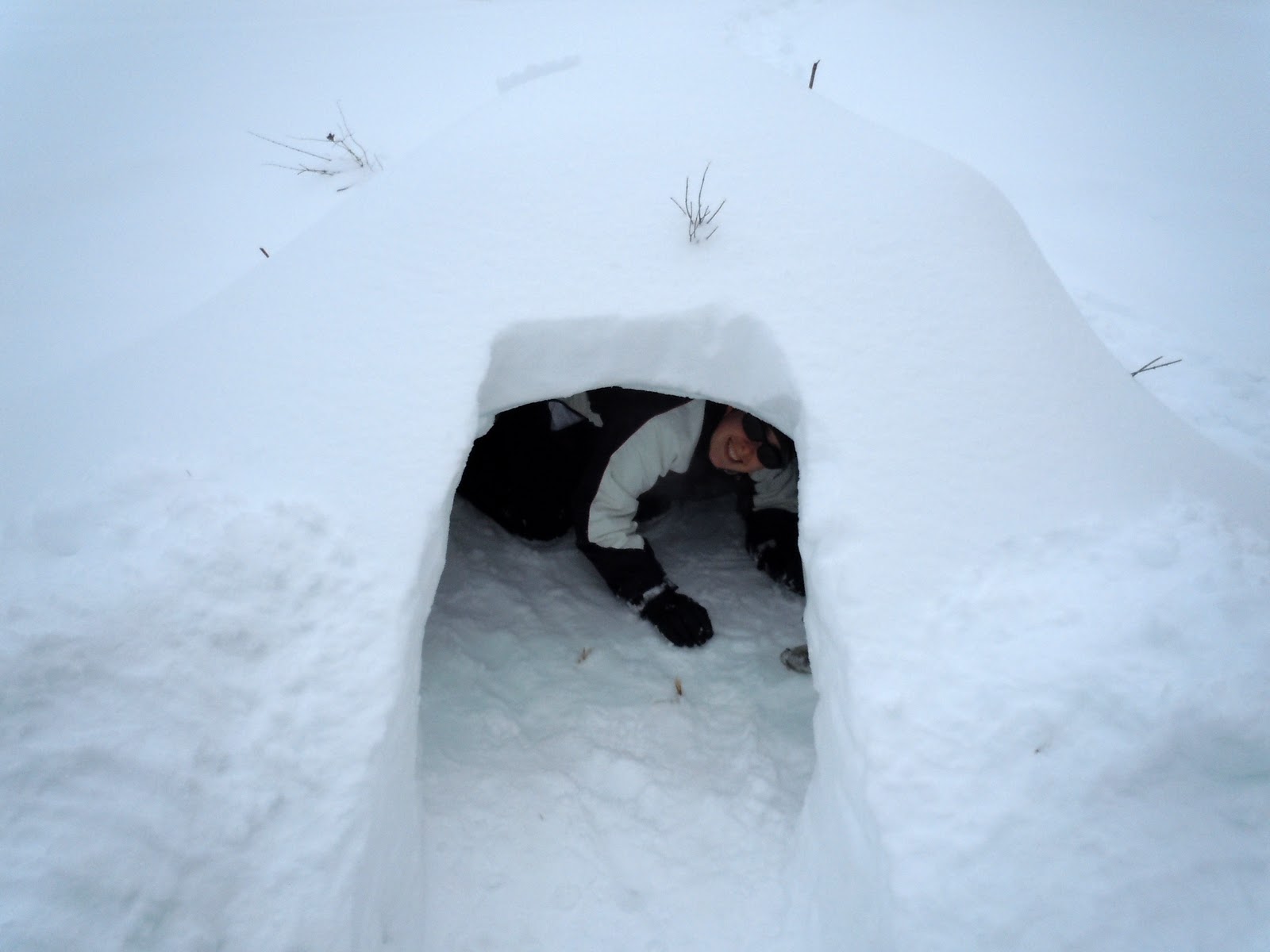
One afternoon after a heavy snowfall, I decided to try my hand at building a quinzhee in the backyard.  A quinzhee is a winter shelter made by piling snow up into a hill and then digging out a cave.  It was a lot of work!


Do you think I spent the night in it?

Now that the snow has melted and Spring is trying to show up, I’m on to more adventures! My GIS class went well, and the next one starts soon.  A pair of bluebirds is eyeing the birdhouse closely, so hopefully there’ll be baby bluebirds soon!  I’m planning a garden: spinach, lettuce, tomatoes, beans, peppers, carrots, and herbs!  Yum!

Friday, January 7, 2011

What's in store for 2011?

Hi everyone! How were your winter holidays? My December was busy! I spent New Year's Eve in New York City, but skipped the Times Square crowd. Ate WAY too much good food! The best? A cappuccino and eclair in Little Italy. Second best? Spanish tapas and sangria!

As the new year has started, so have several new/re-newed projects for Steady:

1) Homebrewing: This is something I've done a little bit before, but I'm hoping to really get into it now. Currently, I have a Mr. Beer kit, which uses a simple process. First batch should be ready in about a week! Plans are in the works to go bigger.

2) Project FeederWatch: My birding hobby! Basically, I watch the birds at my feeder and report it. That data gets compiled and used on a National level. More about this later.

3) Ethnic-Cooking Month: This month my roommate and I are cooking Indian food as much as possible. So far we've made dal, stuffed peppers, a vegetable curry, and parathas. We'll also have a Mexican month and possibly a Thai month.

4) Snowshoeing: I've got the snowshoes, now I'm just waiting for the snow. It's falling as I type!

5) Education: I'm gettin' me some! I'm starting an online certificate program in GIS. Need a map?


I haven't made any resolutions this year, but I do have some goals (in addition to the projects above).  Here they are:

1) go backpacking
2) hike a portion of the Appalachian Trail ( perhaps I can check off 1 and 2 at the same time!)
3) post more and more often on this blog
4) make pickles and can other vegetables and fruits, too (this will have to wait a few months)
5) see at least 100 bird species this year
6) go to at least three "festivals" in the area
7) visit at least five National Parks that I've never been to before

Well, I better get busy! Happy 2011 everyone!

Tuesday, December 7, 2010

Birding 101 With Steady


In my last post, I raved about my newly-awakened interest in birds. I said I'd pass along what I learned, so here we go!

Three Essentials for a Beginning Birder

I've quickly learned that three things are essential to a beginning birder:

1) A good guide book
Every birder has his or her favorite guide book--- of which there are quite a few. They range from the highly local (say, your county) to world-wide coverage. The one I'm using is the Smithsonian Field Guide to the Birds of North America, and I really enjoy it.  Some other popular books include Sibley's, Peterson's Field Guide, and National Geographic's Field Guide.  In addition, many birding organizations publish local and regional checklists, which tell you what birds to expect in an area. 
There are also online identification aids, and even apps for your iPhone!

2) A pair of binoculars
While you can see a lot of birds without them, binoculars are a big help when trying to spy on that feathered friend up in the tree.  They're also useful for making out field markings that distinguish similar birds from each other.
There's a wide variety of binoculars out there, ranging in size, magnification distance, and price.  Even an inexpensive pair can really help out, especially if you're just starting birding.  I got a pair of compact field binoculars from Target for less than $30, and they're great for spying on birds in the backyard.

3) Patience
Learning to identify even your basic backyard birds can take a little bit of effort.  When you get discouraged because all those little brown birds look the same, don't give up!  The more you watch them, the easier it gets to notice small differences.  I've found that keeping a list of the birds I see and writing down their page numbers in my guide book for a quick reference really helps me remember a new friend.

The Life List

I don't think I've known a serious birder until recently.  Thus, I was unaware of many aspects of the hobby (obsession?).  As a compulsive list-maker and crosser-offer, the birder's life list is quite an appealing part of the hobby.  Did you know that people keep track of every bird species they've ever seen? That's a life list.  Some enthusiasts go so far as to travel around the world in search of exotic flyers, or that next number on their list. My life list, to date, covers 79 bird species. It's surprising to sit down and count the number of different birds you already know. Go ahead, try it! Here's a checklist of North American birds to use: American Birding Association's North American Birds Checklist. You can download a .pdf checklist from the "Don't Miss" box on the right side of the page.

How many did you get? Leave me a comment and let me know!  Doing this for the first time also showed me how many birds I didn't know.  For instance, the name mockingbird was familiar, but I had no idea what they actually looked like!

Counting Birds and Checking Them Off

When researching my new hobby of birding, I quickly noticed that in addition to keeping life lists, birders seem to like to have an excuse to go out and count birds, and often have large numbers of birders counting birds at the same time in different locations. Of course, they have quite good reasons behind the counts --- they provide scientists with data about populations, migrations, and the like --- and are opportunities to meet and socialize with other birders.  As I said, there are lots of different organized counts. Coming soon is the Christmas Bird Count.  This one has been going on for over one hundred years! There's also the Great Backyard Bird Count in February.

I haven't signed up for any of these yet, but I'm keeping my eye on them with regards to my winter schedule. I have joined a different program, but you'll have to stay tuned to find out about that adventure!